<!DOCTYPE html>
Why Your Kingman Air Conditioner Blows Warm Air During August Peaks
Why Your Kingman Air Conditioner Blows Warm Air During August Peaks
Ambient Edge Heating, Air Conditioning & Refrigeration Inc. Serves Kingman, Arizona and Mohave County with 24/7 emergency AC repair, routine air conditioning service, and precision system restoration for homes and businesses.
August in Kingman strains every part of your cooling system
August heat in Kingman often runs past 105°F. Afternoon pavement and rooftop temperatures can sit 30 to 50 degrees higher. That environment punishes condensers, capacitors, and compressors. High-desert dust loads filters and coils. Voltage can sag during peak demand. Small weaknesses turn into warm supply air at the worst hour.
The pattern shows up across the 86401 and 86409 zip codes. Central air conditioners, heat pumps, ductless mini-splits, and rooftop units all face the same physics. When outdoor air sits near 110°F, a condenser needs wide open airflow and clean coils to reject heat. Any restriction raises head pressure. The compressor runs hotter. Fan motors draw more amps. The result is lukewarm vents and indoor temperatures that drift above setpoint.
This page explains the real causes that techs find in Kingman homes on Hualapai Mountain Road, Kingman Camelback, Valle Vista, Butler, and Golden Valley. It gives practical checks a homeowner can do. It also shows how a NATE-certified technician restores capacity fast with correct measurements and parts on the truck.
Warm air at the register starts with the heat transfer chain
Every AC must move heat from indoor air to the outdoor air. The chain is simple but unforgiving. The blower pulls air through a filter, across the evaporator coil, and through ductwork to the rooms. Refrigerant absorbs heat in the evaporator, then the compressor pumps hot vapor to the condenser. The condenser coil and its fan reject that heat to the sky. The expansion device meters refrigerant and sets coil temperature for the next pass. If any link fails, supply air warms.
In Mohave County, the stress points are predictable. Plugged filters throttle airflow. Dust-choked condenser fins block heat rejection. Capacitors drift out of spec in the sun. Clogged condensate drains soak insulation and reduce coil performance. Low refrigerant from a slow leak pushes evaporator temperature up and trips freeze-thaw cycles. Short cycling causes poor dehumidification and warm blasts after each restart. Each symptom has a fast path to diagnosis if a tech knows the local conditions and typical equipment.
Common Kingman causes of warm air during August peaks
Field data across Route 66 district homes and Kingman Airport commercial sites points to a short list of failures during extreme heat. These faults hit central air conditioners, heat pumps, and package units alike. Symptoms are consistent, but fixes differ by equipment type and site layout.
1. Dirty condenser coils under high ambient load
Desert dust bakes into the condenser fins. Cottonwood fluff and monsoon debris layer the coil face. When outdoor air is 108°F, a dirty coil can spike condensing temperature past 150°F. That drives head pressure above safe limits. The compressor runs in a hotter envelope and trips thermal protection. Even before a trip, the unit blows warm because the coil cannot reject enough heat to condense refrigerant to a proper liquid. A detail that matters in Kingman: rooftop RTUs near 86409 see direct sun and windblown grit. Side-discharge condensers near gravel yards in Butler clog at the bottom rows first, which is easy to miss without pulling panels.
A proper fix includes a non-acid foaming coil cleaner, a low-pressure rinse from inside out, and a check of fan blade pitch and motor amperage. Many warm-air calls resolve once static pressure on the outdoor fan drops back to spec and the condenser delta-T lands in a normal range.
2. Weak or failed capacitors
Capacitors fail faster in heat. Ambient temps above 100°F cut life. Voltage sags on August afternoons near the Kingman Railroad Depot feeder circuits push start components harder. A weak run capacitor leaves the condenser fan or compressor under-torqued. The fan may spin, but at low RPM. The compressor may hum, start late, or overheat. The indoor blower can also lag on single-stage systems. Result: poor refrigerant flow, low coil heat absorption, and warm vents. On service calls, technicians measure capacitance and replace on the spot. Ambient Edge trucks carry high-quality capacitors and blower motors for same-day restoration.
3. Low refrigerant charge or a small leak
A slow leak is common in older systems across Kingman Camelback and Valle Vista. Vibration at the service valves or rub points on copper near the air handler leaves an oil stain. Low charge lifts evaporator temperature and reduces capacity. Coils can freeze at night, then thaw into August afternoons with a waterlogged plenum and weak cooling. Proper diagnosis uses superheat and subcool readings, not guesswork. A central AC with a fixed orifice needs target superheat matched to indoor wet-bulb and outdoor dry-bulb. A system with a TXV should hold stable superheat while subcool sits within the rated window. EPA 608 certified techs recover, fix the leak, weigh in the charge to nameplate, and confirm performance under load.
4. Blower airflow restrictions and duct leakage
Warm air often ties back to airflow, not refrigerant. A MERV filter that fits poorly allows bypass dust that cakes the evaporator face. Pet hair and drywall dust post-remodel are frequent culprits near the Route 66 Museum district. A collapsed return duct in a hot attic near Hualapai Mountain Park starves the coil. Airflow should land near 350 to 400 CFM per ton in our climate. A quick static pressure test tells the story. If total external static runs high, the coil or filter is blocked. If static is normal but room temperatures vary, expect supply leaks in the attic or unsealed boots. Fixes include coil cleaning, correct filter size, duct sealing with mastic, and balancing dampers.
5. Thermostat or control board faults
Thermostats bake on south-facing walls. In August, sun load can push a thermostat reading 3 to 5 degrees above room temperature. Short cycling follows. Warm air bursts between cycles are the complaint. Programmable stats with incorrect differential settings can also cause short cycles. Control boards on older package units at commercial sites near the Kingman Airport face vibration and heat that cause intermittent call signals. The solution is simple once identified. Relocate or shield the thermostat, correct settings, or replace the board and clean up low-voltage wiring.
6. Condensate drain clogs and sensor trips
Algae and dust combine in Kingman drains to form a tough sludge. A float switch trips to protect the home. Many air handlers shut down the compressor first and leave the blower running, so vents feel warm. Clearing the trap, flushing with a proper solution, and adding a maintenance tablet restores safe operation. The tech also checks that the drain line has fall and is insulated where needed to prevent warm attic air from condensing on pipe walls.
7. Heat pump mode problems
Many homes in Mohave County run high-efficiency heat pumps. A stuck reversing valve or a failed defrost board can place the system in the wrong mode under stress. That causes warm air even though the outdoor unit runs. Techs confirm valve operation by temperature readings on the four-way body and suction line pressure compared to expected charts. If a valve is stuck, high-side and low-side temperatures do not diverge as they should in cool mode. Replacement solves the symptom permanently.
8. Electrical supply issues
Voltage drops during peak demand events happen. Condenser contactors can chatter. Motors overheat. Connections at the disconnect corrode, especially on rooftop units. A contactor with pitted points causes high resistance, low compressor voltage, and poor cooling. The cure is straightforward. Replace the contactor with a quality part. Check wire lugs and torque to spec. Ambient Edge technicians inspect contactors and start components on every August service visit to prevent that mid-afternoon warm air call.
Why Kingman’s environment magnifies small faults
Kingman sits in high desert along historic Route 66 and serves as a gateway to the Skywalk. The dry air feels kind, but the load on an HVAC system is hard. Radiant sun bakes rooftops and condenser cabinets. Fine dust enters through soffits and unsealed returns. Evening monsoon surges push humidity up fast, so coils need clean fins to wring out moisture. A condenser that looks “not bad” in spring can be half-blocked by late July.
On commercial roofs near the Kingman Airport, full-sun RTUs often run with higher supply temperatures in August. Supply air can sit 60 to 65°F under load even when design calls for 55°F. The path back to design capacity involves condenser cleaning, duct leakage tests, and a step-by-step check of subcooling and evaporator superheat. On package units, fan performance is critical. A weak blower wheel with dust-caked blades loses CFM and pushes delta-T down. Once cleaned and balanced, supply temperature drops and space comfort returns.
Diagnostic approach used by NATE-certified techs in Mohave County
A proper diagnosis starts with the symptom. AC blowing warm air leads to targeted checks in a defined order. Technicians who know Kingman’s heat check airflow first because many failures come from dirt and dust. They then move to electrical health and refrigerant circuit performance.
The workflow below reflects common August calls in 86401 and 86409 single-family homes and in small businesses near the Desert Diamond Distillery and the Mohave Museum of History and Arts. It cuts time to fix and reduces callbacks because each reading ties to a threshold.
Airflow and static pressure
Techs measure total external static pressure with a manometer. If pressure is above nameplate, the blower is fighting a clog or a restriction. The tech inspects the filter, evaporator face, and return grilles. Dust mats look like felt on coil upstream sides. A clean coil restores coil temperature split and lowers compressor amp draw. Good airflow protects the compressor on 110°F days.
Electrical and start components
A capacitor test with a digital meter gives a yes or no answer. Start components get replaced if readings drift more than 5 to 10 percent from rating. Ambient Edge stocks high-quality capacitors that hold value under heat. The contactor is checked for pitting and coil resistance. The technician verifies tight, clean lugs. Loose connections generate heat and voltage drop.
Refrigerant circuit
With airflow verified, the technician takes suction and liquid pressures, line temperatures, and ambient readings. Subcooling and superheat numbers guide charge adjustments. A central air system should land near the manufacturer’s subcool target. A heat pump has slightly different targets depending on mode and metering device. If numbers point to a leak, the tech performs a nitrogen pressure test and uses an electronic leak detector. Oil stains often point to service valve cores or rubbed copper at the air handler cabinet. EPA 608 procedures are followed for recovery and charging. That protects the system and the environment.
Controls and staging
Two-stage and variable-speed systems can default to low output if staging wires are loose or thermostats are misconfigured. That creates warm-air complaints during peaks. The technician checks thermostat programming, control board dip switches, and wire terminations. For ductless mini-splits from Mitsubishi Electric or Daikin, remote settings and error codes guide the repair. Wall cassettes need filter cleaning and coil rinses to maintain rated SEER2 performance in dusty conditions.
How equipment type changes the warm-air diagnosis
Kingman homes run a mix of equipment. Hualapai Mountain foothill homes may use heat pumps for shoulder seasons. Older Butler homes often have split central air with gas furnaces. Valle Vista and Golden Valley see more ductless systems in additions and shops. Each system has a unique failure pattern during August peaks.
Central air conditioners with gas furnaces
Common summer faults include dirty evaporator coils above the furnace, weak condenser fan capacitors, and clogged condensate drains. Warm air often pairs with a high indoor delta-T at low airflow or with a low delta-T at high head pressure. The service tech cleans the evaporator, confirms blower wheel cleanliness, and resets charge to spec.
Heat pumps
Warm air can stem from a reversing valve that is not fully shifting. A TXV bulb that lost contact can also skew superheat and cause low capacity. On Trane, Lennox, Carrier, Goodman, Rheem, York, Bryant, and American Standard systems, the procedures are similar. Verify valve operation, check defrost board health, and confirm correct refrigerant mass.
Ductless mini-splits
Ductless systems from Mitsubishi Electric and Daikin handle heat well if clean. Warm air almost always comes from blocked indoor filters, dirty coils, or fan wheels packed with dust. Outdoor units need clear fins and proper drain routing. A full cleaning of the cassette and a coil rinse bring back cold supply air fast. For garage conversions and sunrooms, adding a new zone with a high-SEER wall cassette can hold 72°F even during 110°F afternoons.
Package units and rooftop units
RTUs near Kingman Airport and along industrial corridors face extreme sun and wind. Fan belts glaze and slip, which cuts airflow across coils. Contactors burn faster. Warm air at the diffusers often tracks to low condenser airflow or a seized economizer damper. A full tune includes belt inspection, pulley alignment, economizer calibration, and coil cleaning. With these steps, supply temperature returns to the mid 50s under load.
Small homeowner checks before calling for emergency AC repair
Some issues have a quick at-home check. These steps avoid unnecessary downtime. If the system still blows warm, call for professional air conditioning service in Kingman, AZ. During August, a fast diagnosis protects health and property.
- Confirm the thermostat is on Cool, Fan on Auto, and the setpoint below room temp.
- Check the filter size and condition. Replace if dirty or bowed. Use the correct MERV rating.
- Inspect the outdoor unit. Clear weeds and debris. Do not spray a hot coil with high pressure.
- Look for ice on refrigerant lines. If present, shut the system off for two hours to thaw and call.
- Check the breaker and outdoor disconnect. Reset once if tripped. If it trips again, call.
What to expect from a same-day repair visit in Kingman
Ambient Edge teams are based minutes from the historic Route 66 district. Dispatch covers 86401 and 86409 zip codes with rapid response. Technicians arrive in stocked trucks. They carry contactors, capacitors, blower motors, MERV filters, and coil cleaners. The goal is to restore cold air on the first trip.
The visit begins with symptom discussion and a quick visual. The tech checks filter, indoor coil access, drain pan, and outdoor coil face. Next come electrical tests and static pressure readings. If airflow is sound, gauges go on and temperature clamps go in place. Superheat and subcool values guide the charge. The technician explains readings in plain terms and shows before and after numbers. For refrigerant leaks, the tech provides repair options and a clear price before work.
For commercial refrigeration repair or rooftop AC service, the process is similar but includes belt and pulley checks, economizer inspection, and a scan of the heat exchanger on combination units for safety. Documentation includes model, serial, and readings. That record helps with seasonal trends in Mohave County heat.
Engineering detail: the temperature splits that matter in August
Numbers cut through guesswork. A properly loaded system in Kingman with clean coils and correct charge will produce a 18 to 22°F temperature drop across the evaporator at target airflow. Outdoor condenser delta-T varies with load but should align with manufacturer charts. High head pressure with low subcool points to airflow limits or a metering issue. Low suction with low superheat suggests a floodback risk, often seen after thaw when airflow is still weak.
Static pressure ranges matter. Many residential air handlers want total external static at or below 0.5 inches water column. In older duct systems around Butler, returns were undersized. Readings of 0.8 or higher show up often. The fix may be as simple as adding a return or upgrading the filter rack to a deeper media that reduces pressure drop. That single change can drop compressor amps under August load and bring colder supply air without touching the refrigerant circuit.
On heat pumps, check the liquid line temperature entering the air handler and the suction line temp leaving the evaporator. Stable superheat and subcool in spec confirm the metering device is working. A drifting superheat at steady state signals a TXV bulb issue or flashing due to restricted liquid, sometimes from a clogged filter-drier. A quick drier replacement followed by evacuation and recharge often restores stable cooling.
Brand and equipment support across Kingman
Ambient Edge services all major brands found in Mohave County homes and businesses. That includes Carrier, Lennox, Trane, Goodman, Rheem, York, Bryant, American Standard, Daikin, and Mitsubishi Electric. Technicians perform warranty repairs, out-of-warranty fixes, and full replacements. Factory-approved parts protect SEER2 ratings. System upgrades are available for sunrooms, garage conversions, and additions where ductless mini-splits add clean capacity without major construction.
Local knowledge shortens downtime during heat waves
Service routes cover neighborhoods from Valle Vista to Cerbat and Golden Valley. Crews know the quirks of block homes near the Mohave Museum of History and Arts and the mixed duct layouts in older Kingman Camelback houses. They also service commercial sites along Hualapai Mountain Road and near the Kingman Railroad Depot. This local context helps the team bring the right parts and plan the right fixes before arrival.
Rapid emergency dispatch supports residential and commercial clients across Kingman, plus neighboring areas like Bullhead City, Lake Havasu City, Chloride, Hackberry, Peach Springs, and Dolan Springs. During extreme heat days, call volume spikes. The dispatch team prioritizes no-cooling situations and at-risk occupants. Communication stays clear with arrival windows and technician updates.
Maintenance that prevents August warm-air failures
Preventive maintenance matters more in Kingman than in milder climates. Dust and heat combine to age components fast. A spring tune-up sets the system for summer. That visit cleans coils, confirms airflow, checks refrigerant charge, and replaces weak run capacitors before peak season.
The VIP Maintenance Club offers scheduled visits, priority service, and flat-rate pricing for common parts. Many warm-air calls disappear after one season of documented maintenance. Airflow improves, charge holds steady, and systems stage correctly. Electric bills drop because compressors do not fight head pressure. Businesses on Route 66 and near Kingman Airport see fewer emergency calls when RTUs get coil cleanings and belt checks before July.
When a repair is not enough
Some systems in Mohave County have reached the end. A 15-year-old central AC with repeated refrigerant leaks and a compressor that runs hot in August will keep blowing warm air. Repairs mount. Replacing with a high-efficiency central air conditioner or a heat pump brings stable August performance and lower bills. Ductless additions solve hot rooms that never cool. Rooftop package units with variable-speed options hold setpoint better against late-day sun loads common near industrial parks.
Ambient Edge reviews brands and options with clear numbers. Carrier, Lennox, Trane, Goodman, Rheem, York, Bryant, American Standard, Daikin, and Mitsubishi Electric have models that fit Kingman’s heat and dust. The right match includes filtration, coil accessibility for cleaning, and control strategies that prevent short cycling.
Real scenes from August calls across Kingman
A family near Hualapai Mountain Park reported warm air at 4 pm. The condenser coil was matted with dust. Head pressure ran high. A deep clean and a new run capacitor dropped supply temperature from 68°F to 56°F. Comfort returned the same day.
A small office by the Route 66 Museum had a rooftop unit blowing lukewarm air. The economizer damper stuck half open. The blower belt slipped. The tech calibrated the damper, replaced the belt, cleaned the coil, and reset charge. The next afternoon the space held 73°F with steady 55°F supply air.
A Valle Vista home had recurring warm bursts. The thermostat sat on a sun-heated wall. Relocation and a filter upgrade stabilized cycles. Utility bills dropped by 12 percent in August compared to the prior year, based on client bills shared at the follow-up.
Safety and compliance during emergency AC repair
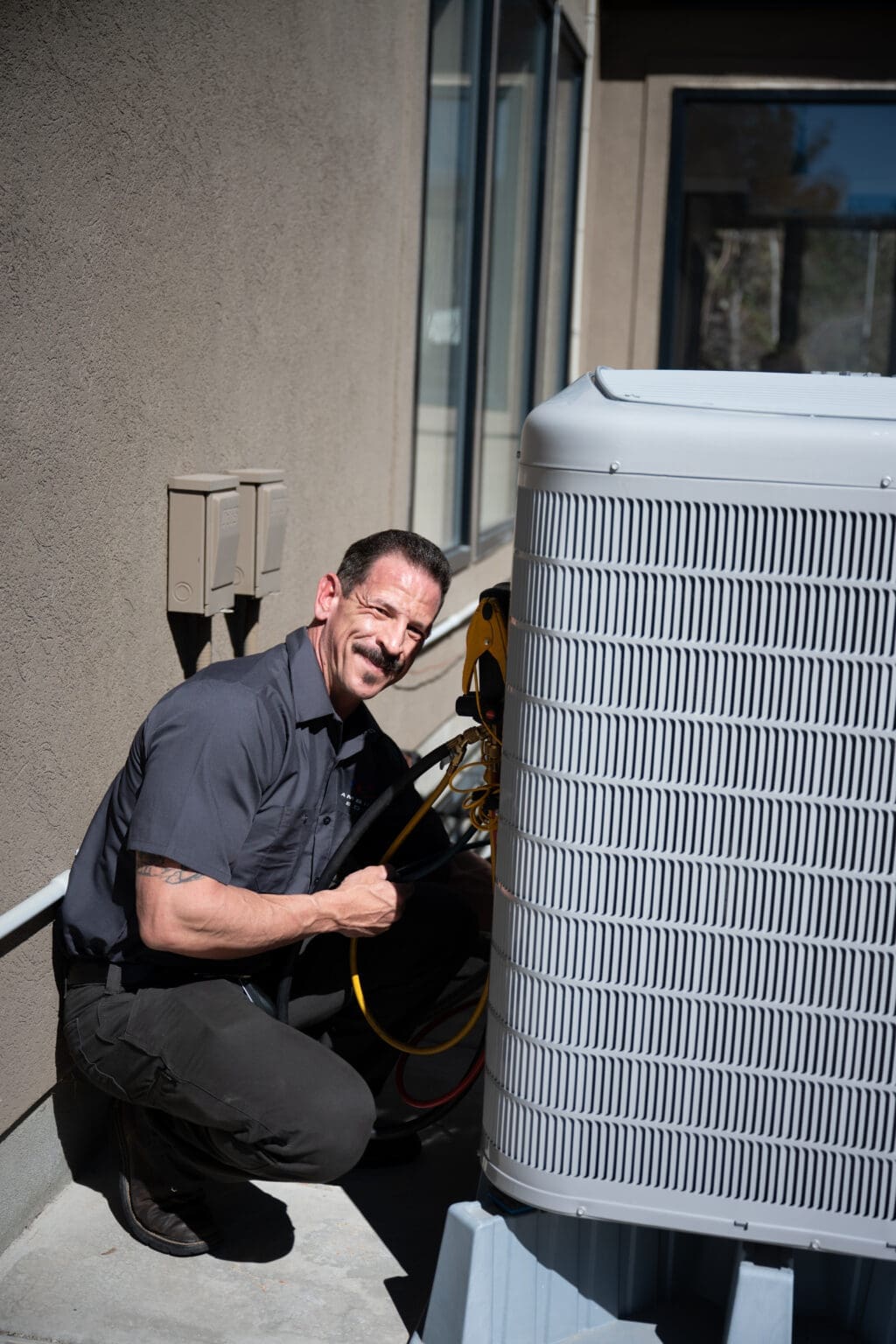
Emergency AC restoration is a life-safety service in Kingman’s heat. Technicians follow EPA 608 rules for refrigerant handling. Ambient Edge holds Arizona ROC licensing, bonded and insured under ROC #245843. NATE-certified professionals manage electrical lockout, ladder safety for RTUs, and rooftop heat exposure protocols. Work steps protect the home or business and deliver a reliable repair under pressure.
Clear pricing and fast authorization
Flat-rate pricing removes guesswork. The technician presents repair options before work. That includes part quality, warranty terms, and any maintenance steps recommended to prevent repeat issues. For businesses near Kingman Airport, the team coordinates with facility managers to meet access rules and keep operations running. For homeowners, the process stays simple. Agree on the fix, see the readings, and feel cold air again.
Signs it is time to call for 24/7 emergency service in Mohave County
Warm air during August can escalate to a no-cooling hazard. If these symptoms show up, request help now. Ambient Edge runs round-the-clock dispatch to protect Kingman residents during extreme heat.
- Indoor temperature rises above 80°F and will not drop, especially with elderly or infants in the home.
- Breaker trips twice or equipment hums without starting.
- Ice on lines or water leaking around the air handler during a heat wave.
- Burning smell, sparking at the disconnect, or visible arcing at the contactor.
- Commercial RTU failure affecting occupied spaces or refrigeration cases.
Service coverage and response times around Kingman
Ambient Edge supports residential addresses and commercial sites throughout Kingman, AZ 86401, 86402, and 86409. Coverage includes the Hualapai Mountain Road area, Kingman Camelback, Valle Vista, Butler, Golden Valley to the west, and Cerbat. Teams also serve nearby communities like Bullhead City and Lake Havasu City, plus Chloride, Hackberry, Peach Springs, and Dolan Springs by appointment. During August peaks, extra trucks stage near the historic Route 66 corridor to reduce drive times and hold map-pack response standards.
What makes Ambient Edge a trusted AC partner in Kingman
Clients choose a company for skill, speed, and integrity. The Ambient Edge team blends technical depth with local experience. Trucks carry the parts most likely to fail in August. Technicians use measured diagnostics, not guesses. Repairs meet manufacturer specs to protect efficiency and warranty coverage. Each visit builds a record for better long-term performance in Mohave County heat.
Credentials back the work. NATE-certified technicians handle advanced diagnostics on central air, heat pumps, ductless mini-splits, package units, and rooftop units. The company is licensed and insured under ROC #245843. EPA 608 certification is standard. Warranty repairs are available for Trane, Lennox, Carrier, Goodman, Rheem, York, Bryant, American Standard, Daikin, and Mitsubishi Electric systems. Flat-rate pricing and a 100 percent satisfaction guarantee support every repair.
If your AC is blowing warm air right now
Act quickly. Kingman’s afternoon highs make indoor heat unsafe. Shut off the system for 15 minutes if you see frost on the lines. Replace a dirty filter. Clear debris from the outdoor coil without bending fins. If air is still warm, request emergency service. A trained tech can restore cooling by correcting airflow, replacing failed capacitors, fixing a contactor, or adjusting refrigerant charge. Many calls resolve in a single visit.
Ambient Edge Heating, Air Conditioning & Refrigeration Inc.
3270 Kino Ave,
Kingman,
AZ
86409,
United States
Phone: +1 928-615-8224
Website: www.ambientedge.com